
An AI summary can sound complete even when the original document contains an important exception. A deadline becomes a suggestion, a proposed change reads like an approved one or a caveat disappears because it occupies only one sentence in a long report.
Use the summary to orient your reading, then give it a checking routine proportionate to the decision. A neat paragraph is not evidence that every statement in it is supported.
Decide what cannot be lost
Before requesting a summary, name the information your task depends on. For a meeting note, that may be decisions, owners and unresolved questions. For a product document, it may be limitations, compatibility and conditions attached to a claim. Ask for these explicitly, but expect to verify them afterwards.
The NIST Generative AI Profile describes confabulation: systems can produce confidently expressed false or erroneous content. A more detailed prompt can improve the structure of a response without guaranteeing its truth.
Trace a claim back to a location
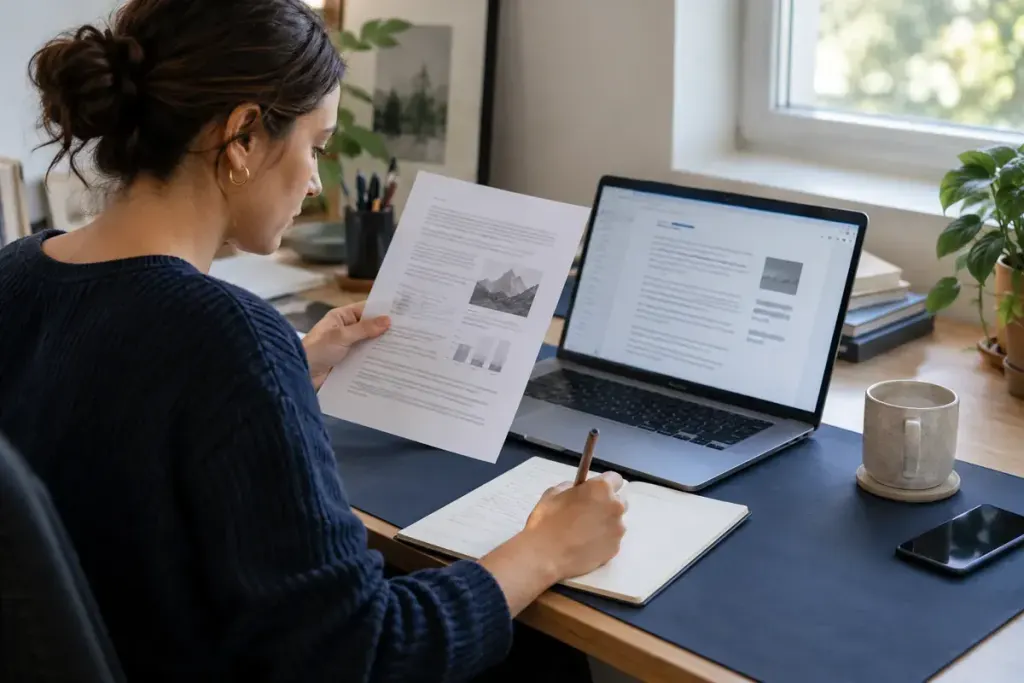
Take the statements that matter and find their supporting passage in the original. Keep a page, section or paragraph reference alongside each one. Check whether the source actually says what the summary claims, rather than merely containing some of the same words.
In an invented example, a report says a trial may begin after a safety review. A summary that says the trial will begin has removed both uncertainty and a condition. The correction is not stylistic; it changes the decision a reader might make.
Look for the missing disagreement
Read the original’s conclusions, limitations and relevant tables directly. Ask what an author would object to if they saw only the summary. Were competing explanations collapsed into one? Was a small subgroup described as the whole population? Were dates or definitions mixed between sections?
A practical check is to write one sentence describing the most important qualification, then confirm that the summary preserves it. If you cannot find a qualification because you have not inspected the original, the summary has not yet saved you that work.
Keep source boundaries visible
When several documents are involved, request a separate source reference for each substantive claim. Check links yourself. Do not assume a citation is genuine just because it looks correctly formatted. Distinguish information in the supplied documents from extra background the system added.
Only upload material to a service when you are authorised to do so and its handling arrangements suit the information. For sensitive work, the choice of tool and permissions is part of the process, not an afterthought.
Label the result according to its use
A personal reading aid can remain rough. A summary used in a public article, operational decision or formal record needs a clearer review trail. Record who checked it, against which source version and when. Where the evidence remains uncertain, keep that uncertainty in the wording.
The useful outcome is not a summary that sounds authoritative. It is one whose important statements you can explain and trace without asking the reader to trust the phrasing.
Continue exploring: Why a Computer-Vision Test Set Should Include the Awkward Photos.